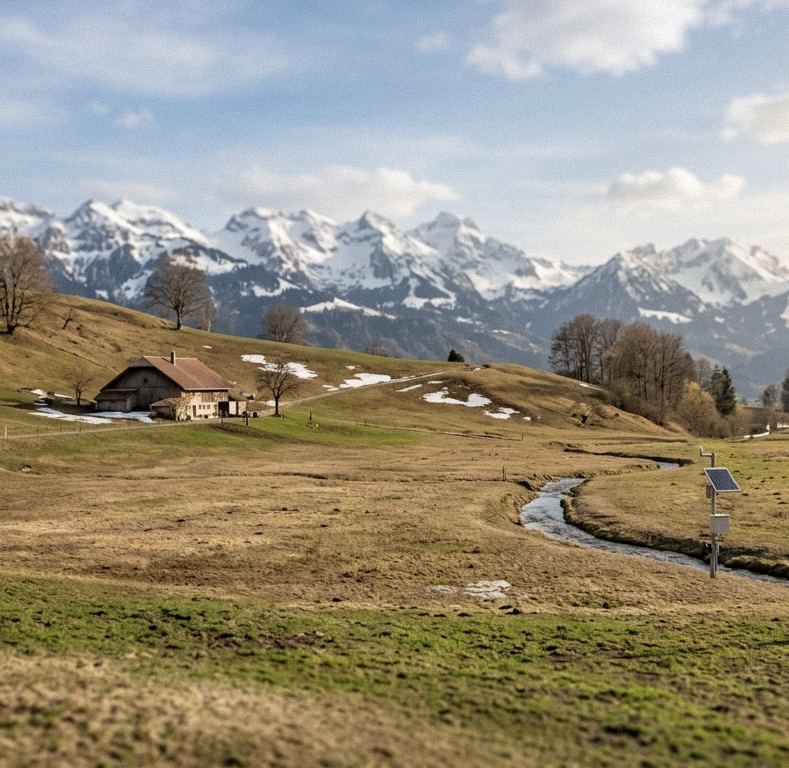
Groundwater & soil moisture: Low snow reserves
/Due to another above-average mild winter in Switzerland, and despite periods of heavy snowfall in February, the snowpack in low and mid-altitude regions has already largely melted as of March 2026. This missing "snow storage" has direct implications for water reserves in the coming months.
Facts
With a nationwide average winter temperature of -0.2 °C, this season was 1.6 °C above the norm, ranking as the 6th warmest winter in Switzerland since records began in 1864. While groundwater levels are currently stable thanks to a wet February, total winter precipitation reached only about 70% of the reference value (MeteoSwiss Blog)
Consequence
The lack of snow means that "delayed" groundwater recharge through gradual melting will not occur. Simultaneously, the vegetation period has started prematurely: plants are already actively extracting moisture from the soil—water that would normally infiltrate into deep aquifers at this time of year. Without this "snow buffer," summer reserves will depend strictly on upcoming rainfall.
Monitoring Relevance
In such a scenario, rain gauges alone do not tell the whole story. Only the direct measurement of soil moisture and local groundwater levels reveals actual water availability. Data from platforms like Trockenheit.admin.ch is therefore of critical importance for municipal planning and agriculture this year.
Devices for Groundwater & Soil Moisture Monitoring:
DL-PR26, DL-PR36, DL-PR36CTD, DL-SMTP, DL-SDD