Peatland restoration: Why precision and decades make the difference
/Peatland restoration is one of the most effective nature-based climate solutionsof our time. Because intact peatlands sequester significantly more CO2 per unit area than forests, they are indispensable as natural carbon sinks.
However, a recent meta-analysis published in the journal Water – "Issues of Peatland Restoration Across Scales" – reveals that many projects fall short of their potential due to a lack of precise monitoring.
Three Core Challenges Identified by the Study:
Spatial Scaling: Peatlands function as large-scale hydrological systems. Collecting data only from small test plots often leads to significant miscalculations of the actual CO2 balance of the entire area.
The Methane Risk: Without exact water level control, restored areas can emit methane – a gas far more potent than CO2 in terms of climate impact. The authors therefore call for real-time monitoring capable of capturing even the finest fluctuations in water levels.
Temporal Continuity: Ecosystems evolve over decades. According to the meta-analysis, short-term studies (1–2 years) are not representative; instead, seamless data series spanning many years are required.
These scientific requirements underscore the importance of high-precision sensor technology in environmental research.
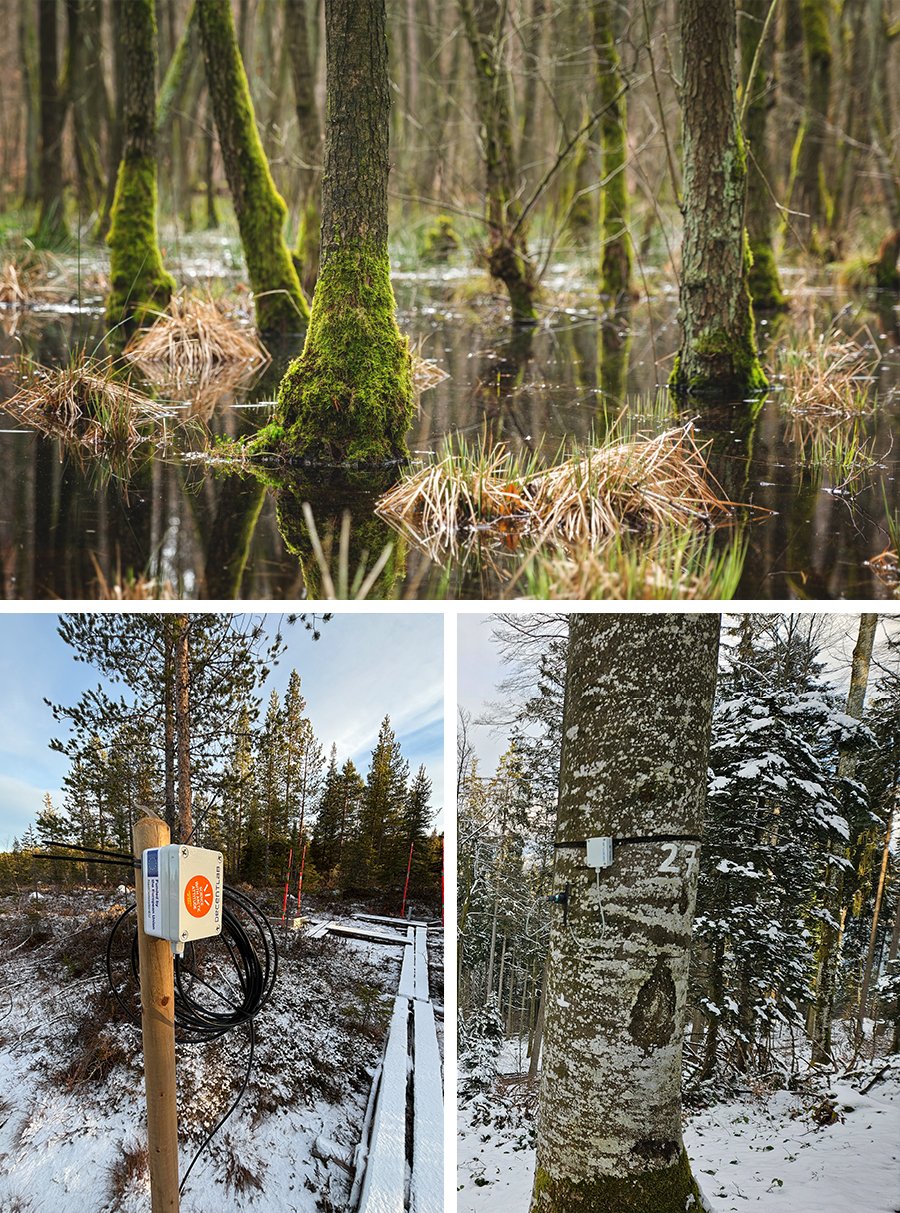
A Look at Practical Application: Earlier in 2025, we reported on the "Peatland Restoration Research in Finland" project, which utilizes Decentlab sensors, including the DL-PR26 and DL-ZN1. In this EU-funded project (LIFE PeatCarbon),researchers are investigating the effects of rewetting on the water cycle and greenhouse gas emissions to enable reliable, long-term projections for carbon storage.
Read the study