Early warning for icy roads
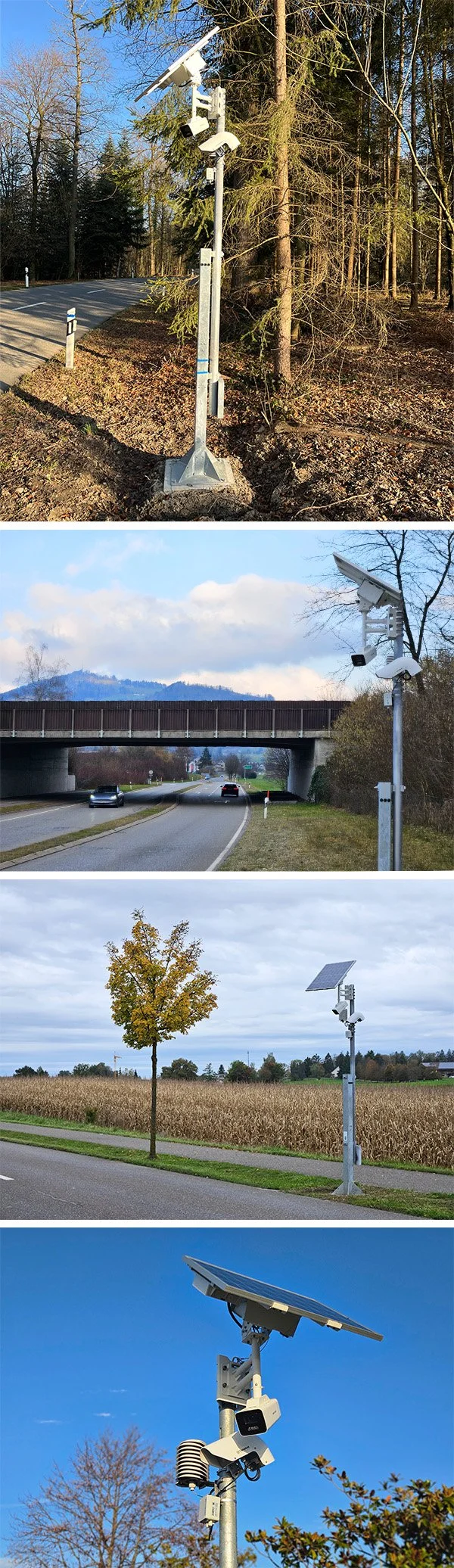
/The ice early-warning stations are located at exposed and critical sites. Each consists of a camera, an infrared temperature sensor and an air condition sensor. The DL-CWS2 handles the infrared and air measurements. Thanks to the stations, time-consuming inspection drives are no longer needed. These add up to around 320,000 km a year, the equivalent of eight times around the Earth. Instead, the canton’s winter service staff can head out exactly where they are needed. This saves staff resources and protects the environment.
What is measured
The cameras take a still image of the road surface every ten minutes. The camera detects whether the road is dry, wet or covered with snow. The sensors measure whether the road temperature is below freezing. The air condition sensor measures the air temperature and humidity. The station is fully self-sufficient. The cameras are powered by solar panels. The air condition sensor and infrared sensor run on a battery and operate for several years without a battery change. The data is sent to the cloud services via LoRaWAN and mobile network.
From measurement to deployment
A central evaluation determines where snowfall or black ice poses a risk. Together with information from a weather forecast model, the station data produces a short-term forecast for the next 12 to 36 hours. This makes it easier to plan deployments, including at night. In winter 2024/25, winter service in part of the canton and on the motorways was already dispatched based on data from the stations installed so far. This worked well.
The DL-CWS2 is already in use in many other municipalities and cities, for example across the entire District of Hof in Bavaria.
Read the full article by the Canton of Zurich
(in German)
→ Download Datasheet DL-CWS2