Tracking co₂ emissions – the role of innovative sensors
/To implement climate targets effectively, it is not enough to calculate emissions – they need to be measured as accurately as possible. This is especially complex in cities, where traffic, buildings, industry, and weather all interact. This research was recently featured in the SRF podcast Echo der Zeit.
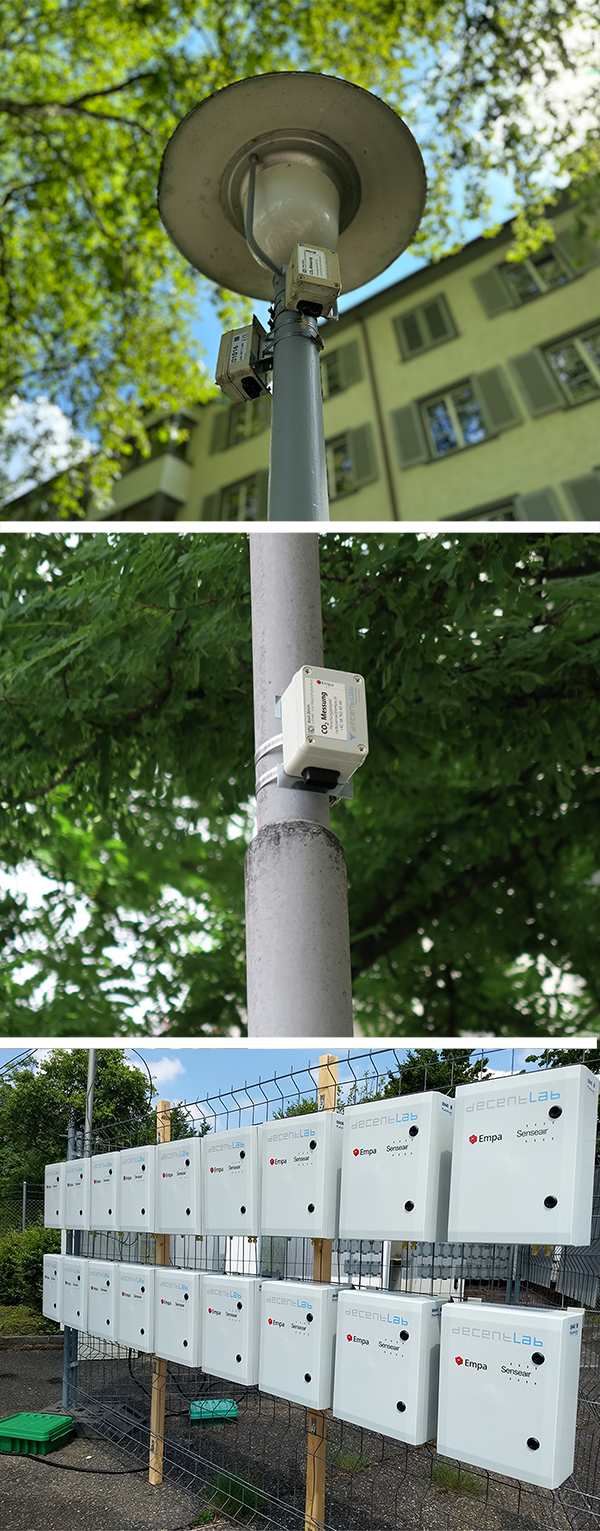
In cities such as Zurich and Munich, sensors were installed on street poles, rooftops, trees, and mobile infrastructure. The goal is to capture CO₂ emissions directly in the urban environment, identify hotspots, and track temporal variations.
(Project: ICOS Overview)
In Zurich, CO₂ concentrations were measured over three years at around 60 locations and combined with classical inventories. This approach creates a dynamic picture of urban emissions, showing when and where greenhouse gases are released.
(Zurich Case Study: Tracking Zurich’s path to carbon neutrality)
(Zurich Case Study: Cities exploring new technology for emissions monitoring)
In Munich, the sensor network provides new insights into the city’s CO₂ balance, makes local emission hotspots visible, and supports targeted climate action.
(Munich Case Study)
Various types of sensors were used in these projects, including Decentlab’s DL‑LP8P sensors and other devices developed in collaboration with Empa. They provide continuous measurements of CO₂ concentrations, which, when combined with models, offer a precise view of urban emissions.