From asphalt to canals: 6 years of climate data from the Netherlands
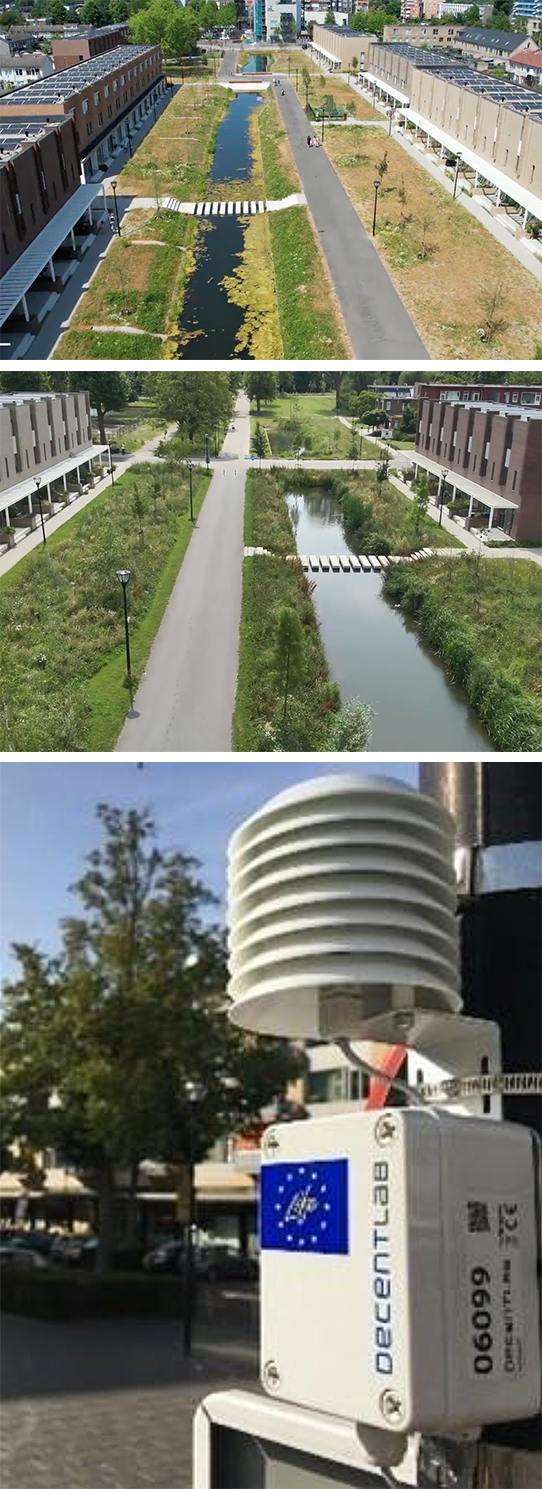
/What happens to a neighbourhood's climate when you replace roads with trees and water? Between 2019 and 2025, the European LIFE Critical project measured exactly that in a Dutch city district. Led by the Municipality of Dordrecht and OnePlanet Research Center, two areas were transformed: an asphalted road corridor became a landscape of canals, footpaths, and trees, and the local park was upgraded with new water features and denser vegetation.
A sensor network monitored temperature, humidity, nitrogen dioxide, and particulate matter. A network of 15 Decentlab DL-SHT35-001 | Air Temperature and Humidity Sensor with Radiation Shield for LoRaWAN® recorded temperature and humidity across park, residential, and roadside locations.
Key findings
Park and blue-green areas were consistently cooler than built-up zones, with the strongest effects during heat events.
Results suggest the transformation reduced extreme temperature differences from 1.4 °C to 0.9 °C.
NO₂ concentrations were systematically lower in green and low-traffic areas.
Feedback from the project team
"Over these years they showed excellent stability and time coverage, they helped us quantify the climate differences between residential and park areas, and compare conditions before and after an urban transformation. Thanks for your continued support — we are glad to have worked with such a reliable company."
Read the Final Monitoring Report for the full results.