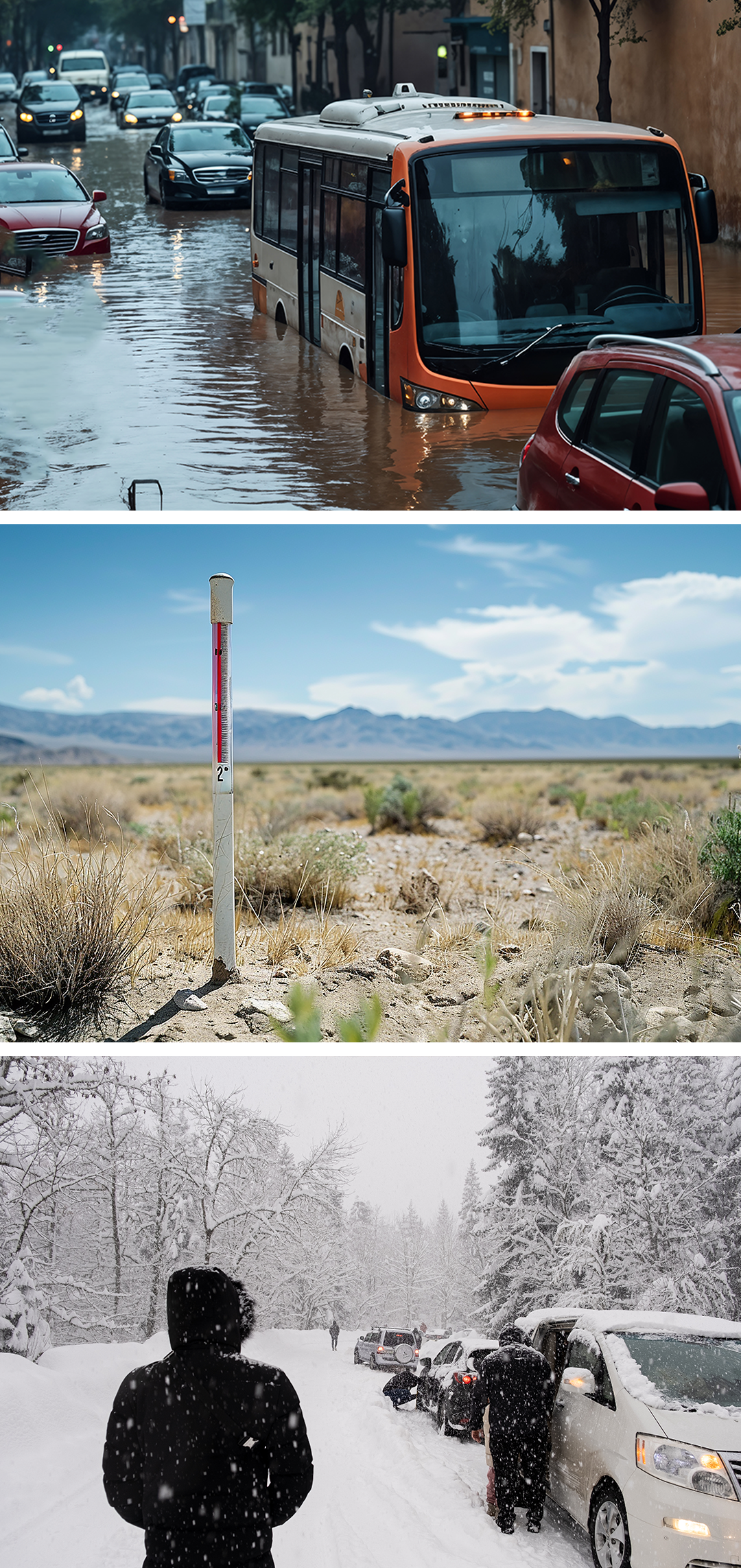
The world's weather – a snapshot
/The winter of 2025/26 has been a study in contrasts. By February, Switzerland had barely seen snow — while Japan was buried under two metres of it, with the army called in for disaster relief. Australia recorded local temperatures of nearly 50 degrees and evacuated thousands from bushfires. Storms battered the USA and Portugal. Wildfires swept Argentina.
February made things worse. Intense storms drenched Western Europe and North Africa — France, Spain, Portugal and Morocco all suffered severe flooding. In Ethiopia people died in floods and landslides. In Kenya after torrential rain submerged Nairobi.
The bigger picture: February 2026 was the fifth warmest February on record, sitting 1.49 °C above pre-industrial levels (MeteoSwiss). The science is clear — extreme rainfall and drought are becoming more frequent, and climate change is making them more intense.
This is precisely where continuous environmental monitoring matters. Water levels, soil saturation, snowpack, rainfall intensity — tracked not as one-off readings, but as long-term time series. It is that accumulation of data over months and years that reveals patterns no single measurement ever could: when a slope is approaching its limit, how a river responds to a given storm, which sites are most vulnerable to temperature swings. The foundation for understanding change — and for warning when it counts.
Devices for flood and weather monitoring:
DL-MBX, DL-RAD, DL-LID, DL-TBRG