After the heat: why long-term data matters now
/Brown forests in July, dry streambeds, yellow meadows. In Switzerland, summer 2026 was the hottest since records began in 1864, around 3.4 °C warmer than the norm, following a winter with little snow and a dry spring. In an interview, the director of the Swiss Federal Research Institute WSL, our customer and partner, puts it into perspective: with three degrees of climate warming, a summer like this would be merely average in terms of temperature.
What can research do in the middle of an extreme? Above all, measure and show what is happening right now, and turn observations into facts for authorities, policymakers and practitioners.
The catch: once the event is over, attention fades. Yet the data already shows severe damage. WSL's Sanasilvainventory, tracking Swiss forest health since 1985, recorded the highest broadleaf tree mortality in the entire series: 5 %. And this is only the beginning: how much the trees have been weakened will become clear over the coming years. Monitoring has to keep running when the headlines stop.
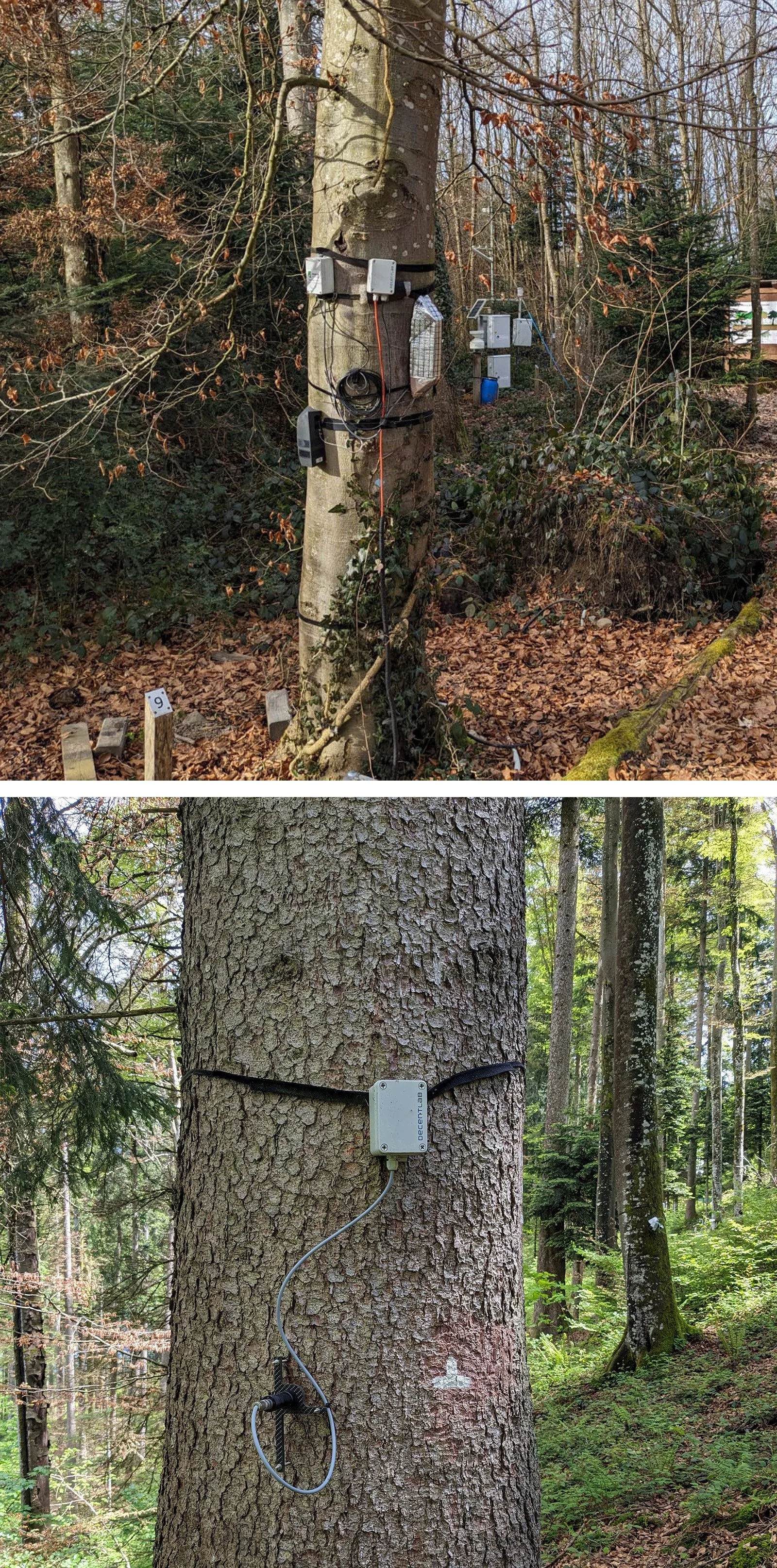
Long-term monitoring only works if the measurements keep running reliably, at remote sites, through heat and frost, without constant maintenance. That is what our sensors are built for: soil moisture, water levels, air temperature & humidity, stem radius changes recorded every 10 minutes, for years.
Read the full interview
Read the Sanasilva Bulletin 2026
→ Explore Decentlab's environmental monitoring solutions