Europe’s Flood Risk: The Role of Climate and Aging
/The AGU study examines how climate change and Europe’s aging population together affect flood risk, especially for vulnerable groups.
Combination of climate change and demographic changes:
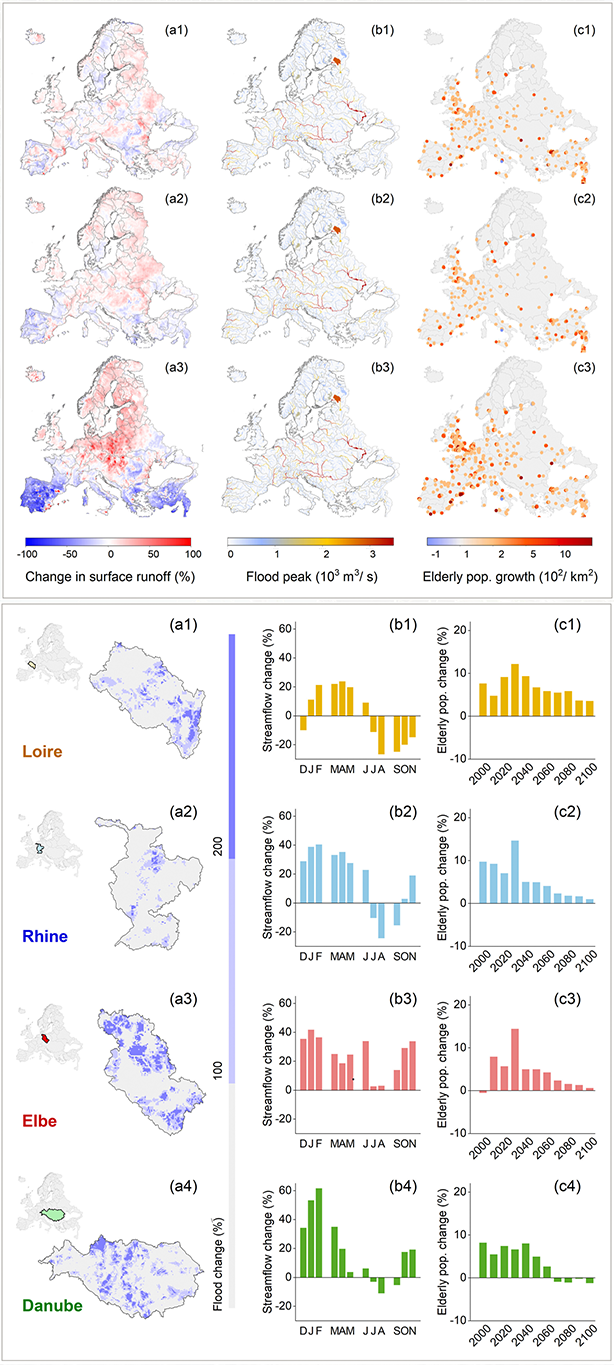
In Central and Western Europe, more intense rainfall—particularly in winter and spring—is causing more frequent and severe flooding. Vulnerable populations, including older adults, are especially at risk because they may have difficulty responding quickly or accessing help.
Regional differences and vulnerability:
People in densely populated or lower-income areas face the greatest risk. Wealthier regions often have better early-warning systems and infrastructure.
Methodology:
The study combined climate models and socioeconomic scenarios with hydrological and hydraulic simulations to analyze flood exposure and vulnerability over space and time.
Conclusion:
Climate change and demographic shifts increase flood risk for vulnerable populations and can exacerbate regional inequalities. The results highlight the importance of considering social vulnerability in flood risk management.
Relevance:
Flood risks cannot be addressed without accounting for both climate change and social factors. Early-warning systems, urban adaptation, and targeted protection for vulnerable groups are becoming increasingly critical.
Read full study
Devices for flood monitoring:
DL-MBX, DL-RAD, DL-LID